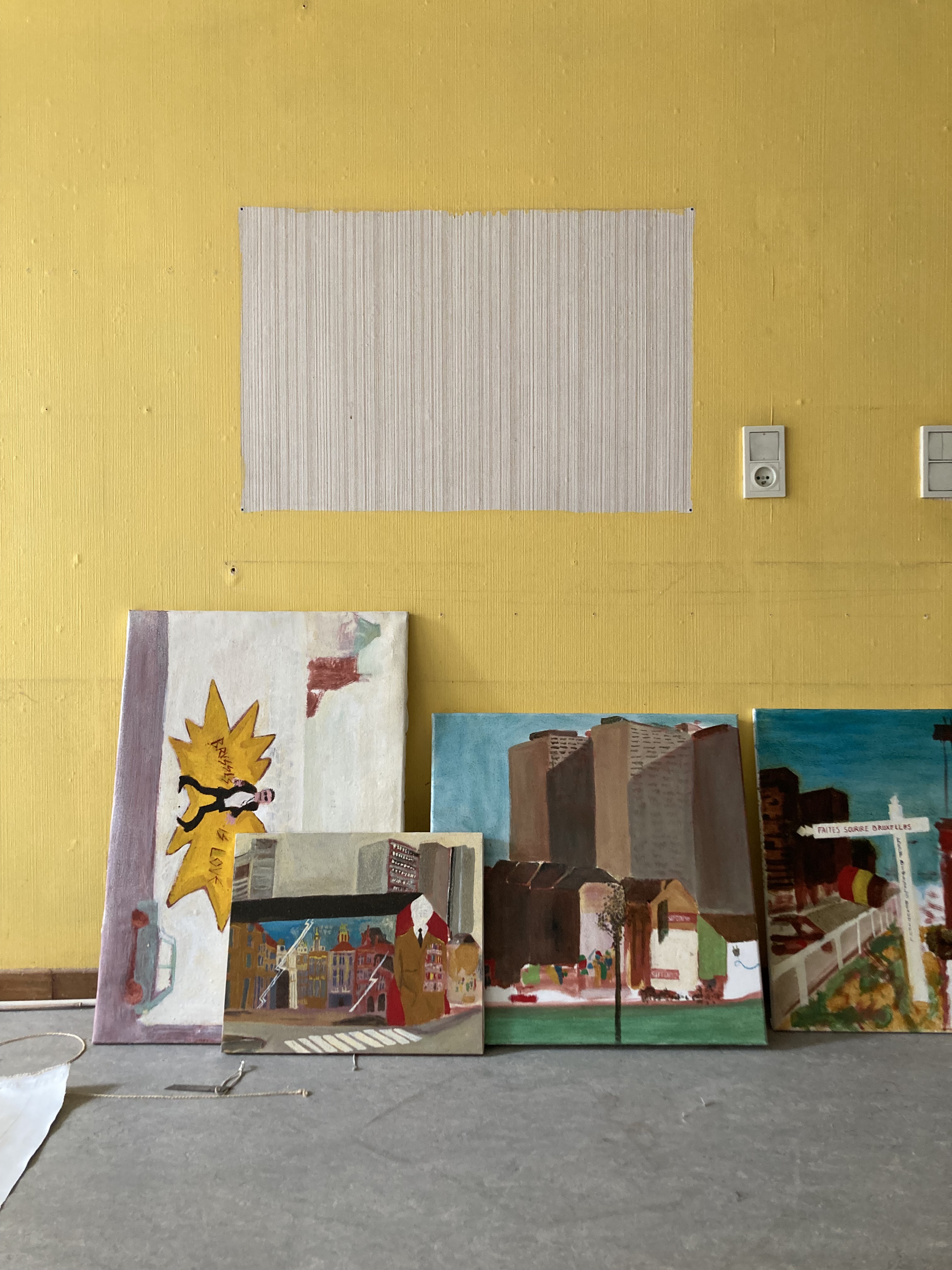
This page offers an overview of painting and artistic practices from the collective studios I organize in vacant buildings. It also features historically relevant examples from contemporary art that resonate with me and inspire my projects.
On the table – current practices – Now at work
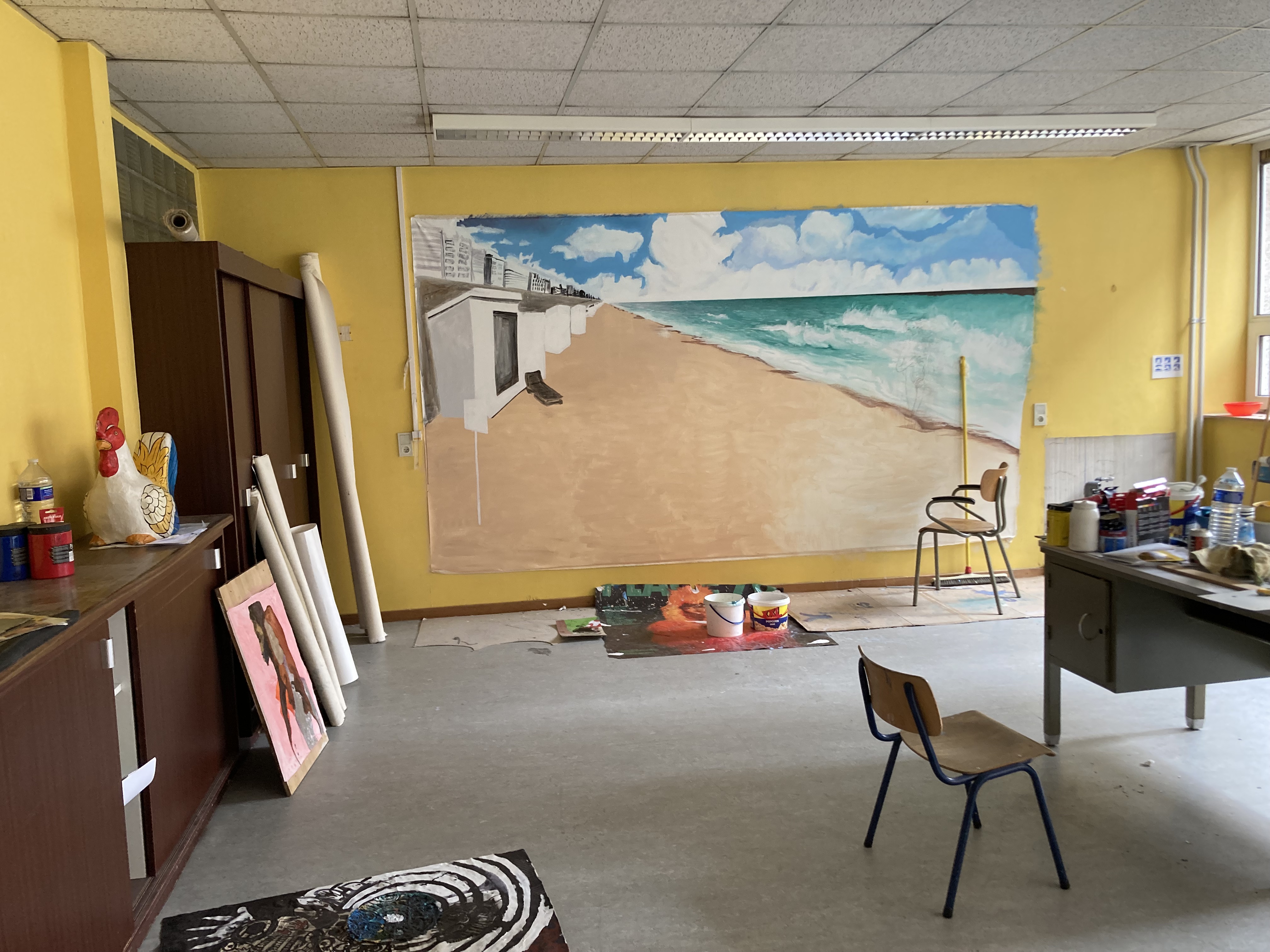
Land Am Meer —This first example is a collaborative project with Petrus Dekker, a former commodore in the Dutch navy, who wanted to paint a sea. I proposed a studio-based residency, guiding him through the painting process as part of the Echo project. Beyond teaching, the collaboration serves as a way to communicate and create work together. The work is currently on view at Ost Friesland Biennale
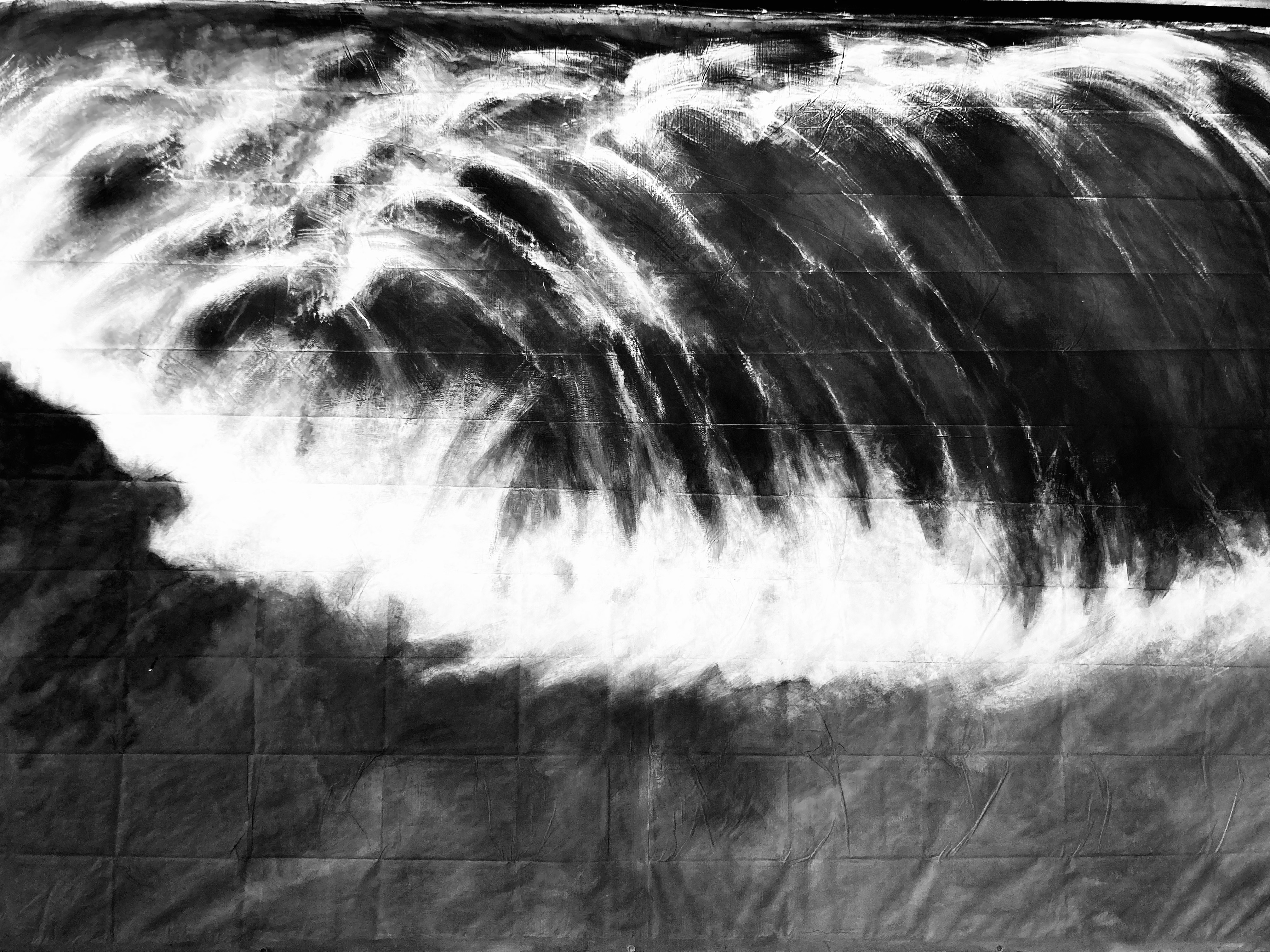
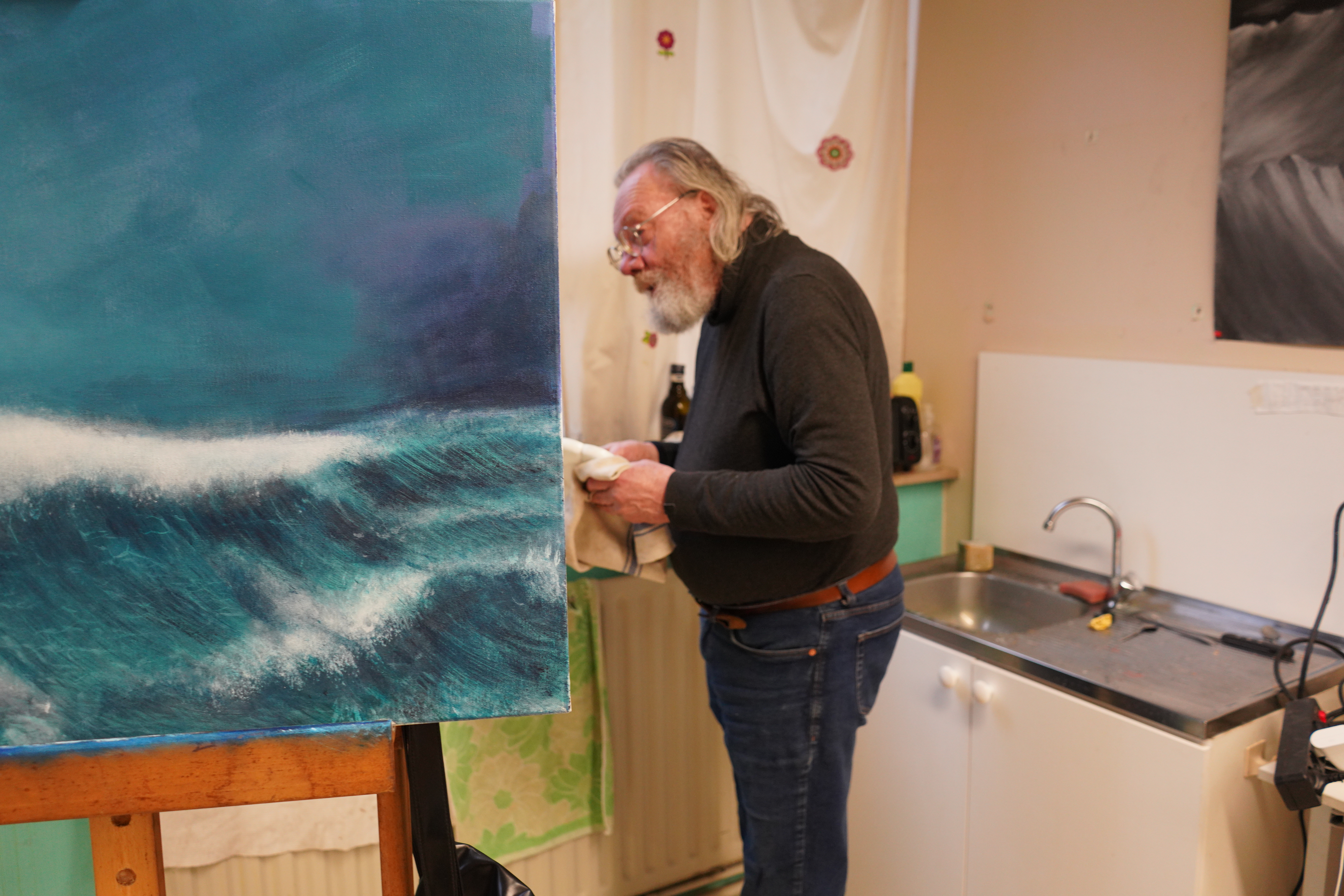
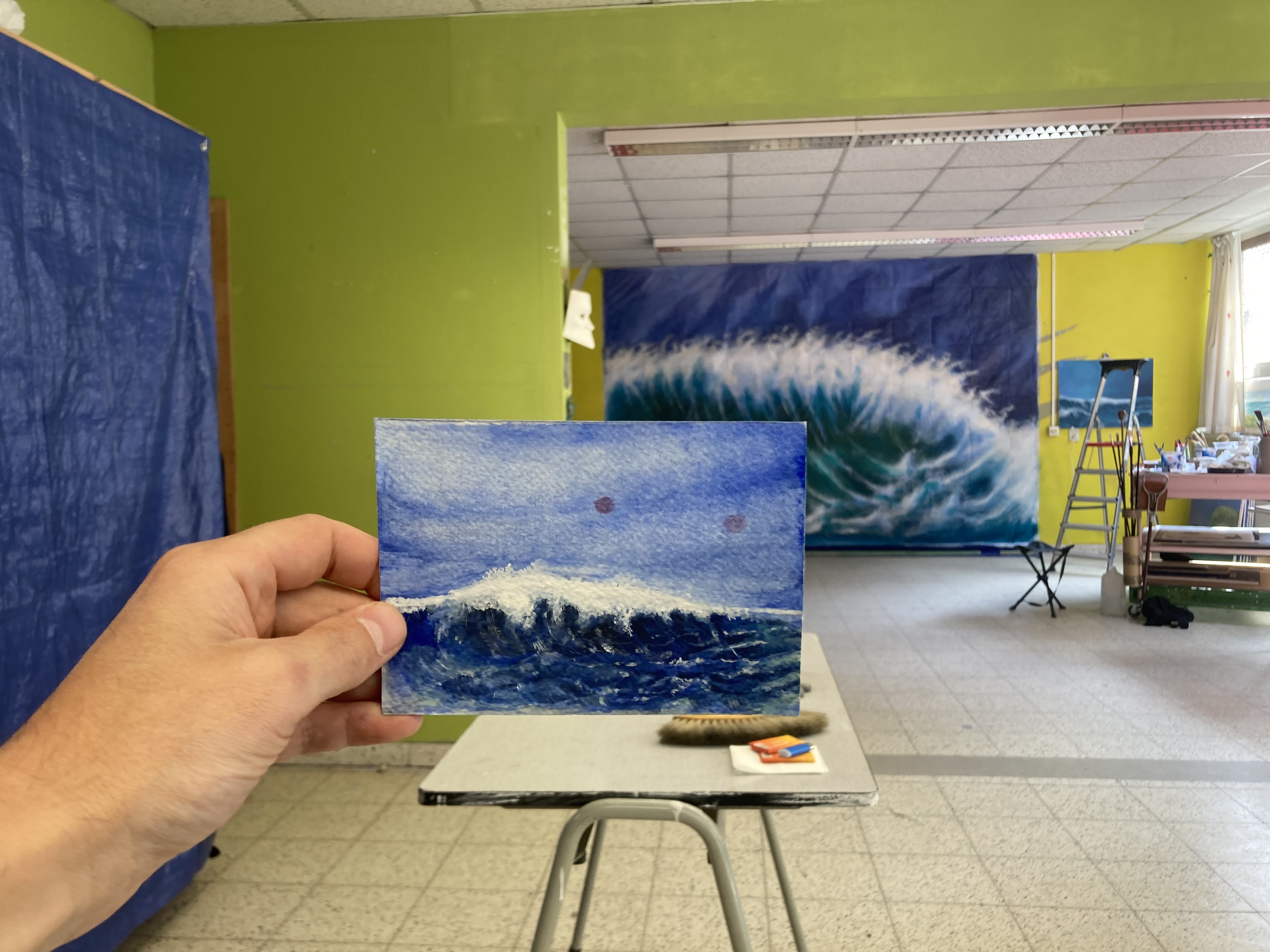
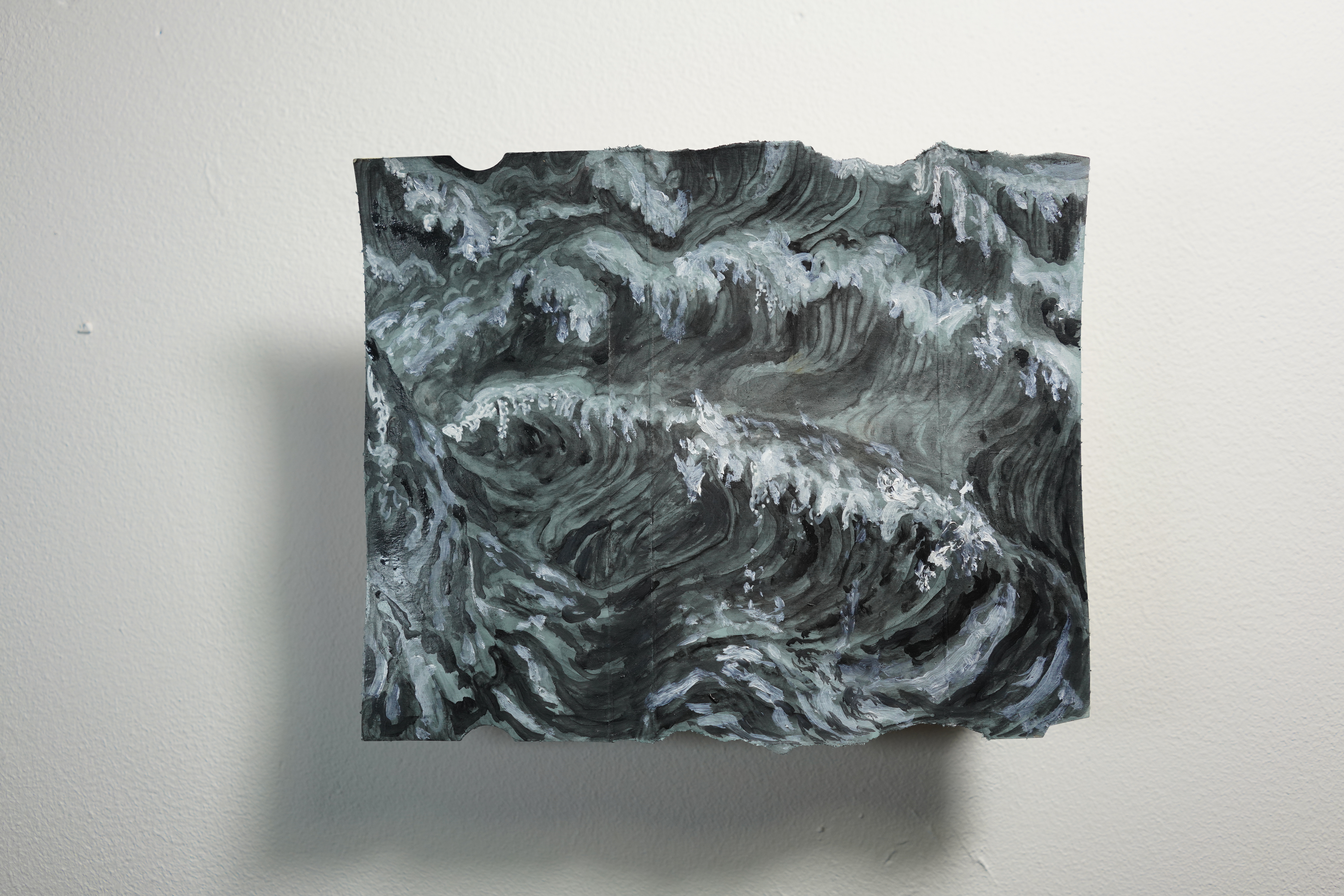
There’s a beautiful story behind this work—or rather, it emerged through a gradual process. The starting point is the story of Petrus Dekker, a 76-year-old man, former paratrooper, and naval officer in the Dutch navy. He served as a commodore on large military vessels and sailed on nearly every type of warship. However, he had no background in painting.
Over time, through our conversations in the park and at the local café, Petrus shared his long-standing wish to create a monumental painting of the sea. After we visited the Anselm Kiefer exhibition together, with its monumental canvases and installations, I invited him to begin painting his sea in my studio, Studio Hipotetis.
There, he started painting seascapes on blue tarpaulins. Those works eventually inspired the creation of the miniature painting you see here.
A part of the painting process takes place remotely. Some of the cardboard paintings are initiated in the studio and then sent to other artists or collaborators. Each recipient is invited to reflect, respond, and contribute visually to the work. These paintings become correspondences: slow, tangible conversations that unfold across time and distance.
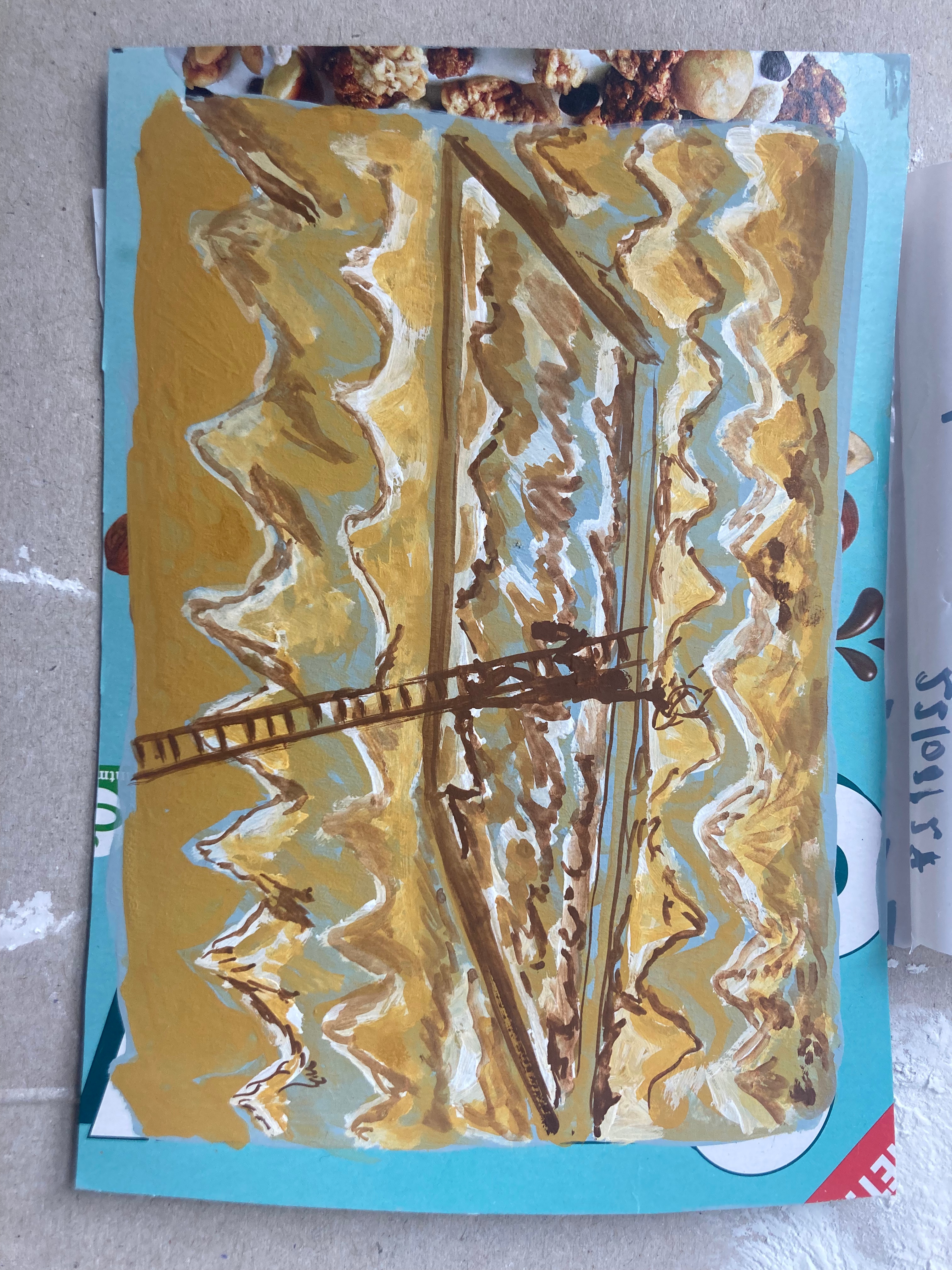

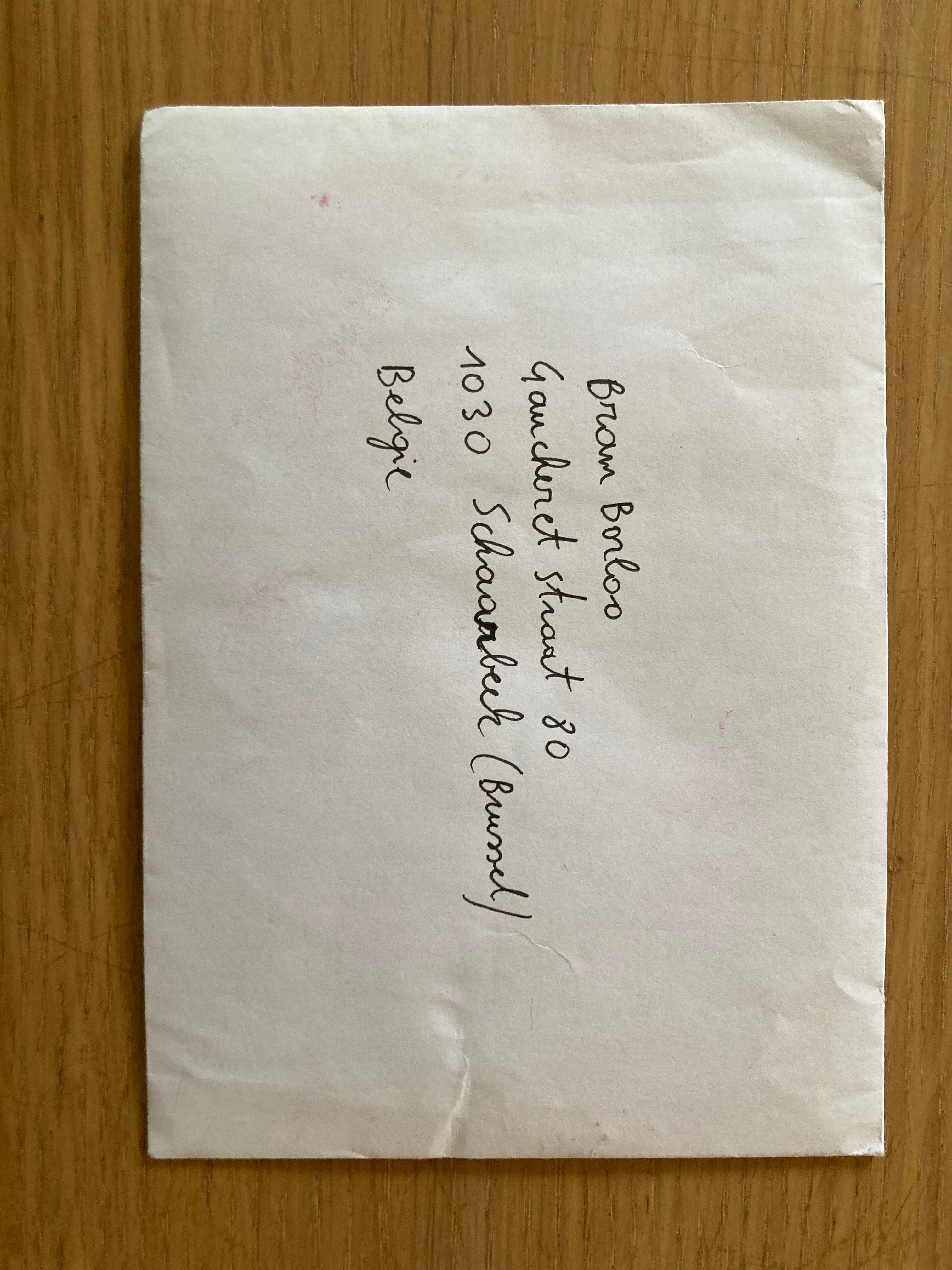
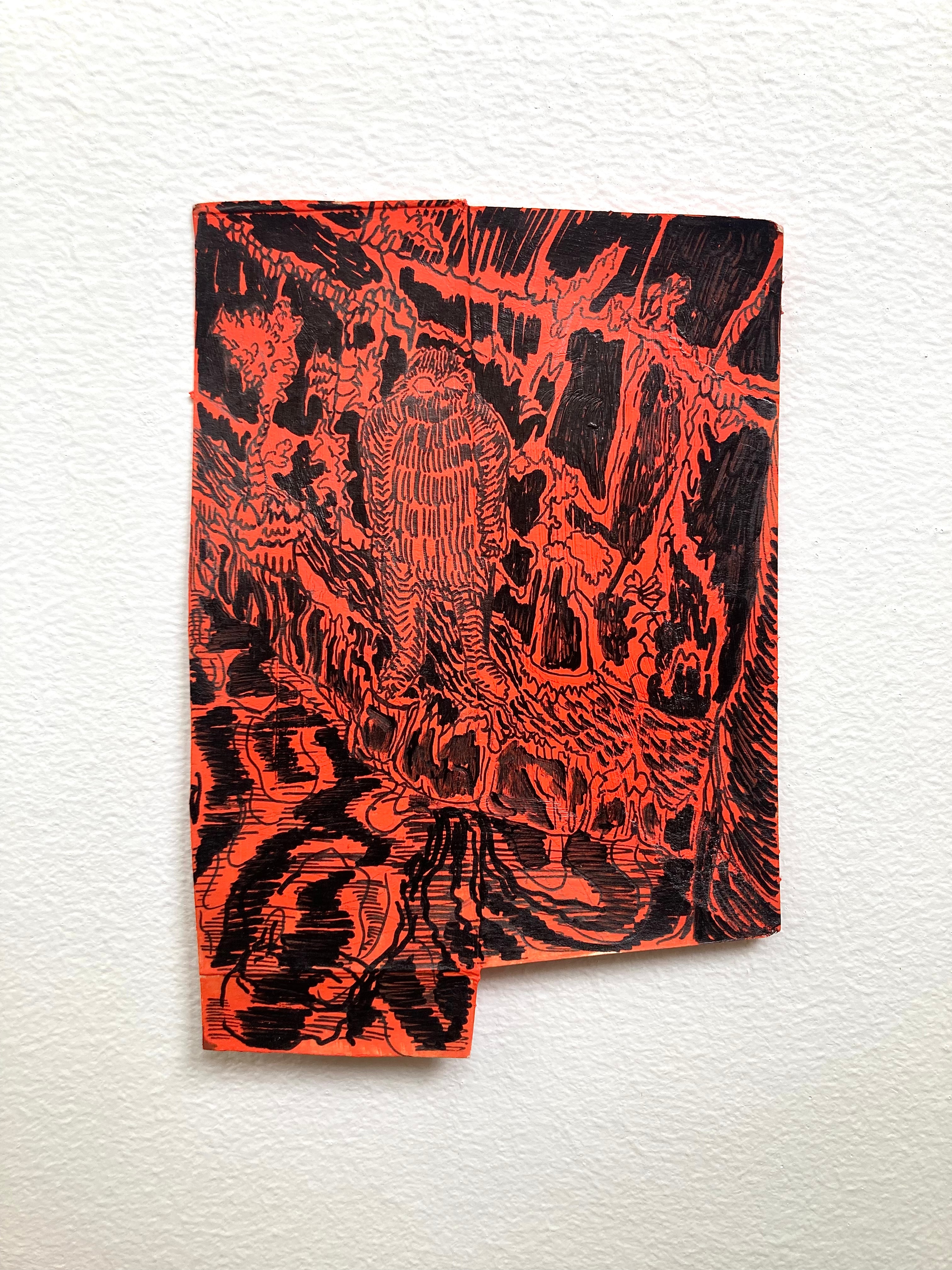
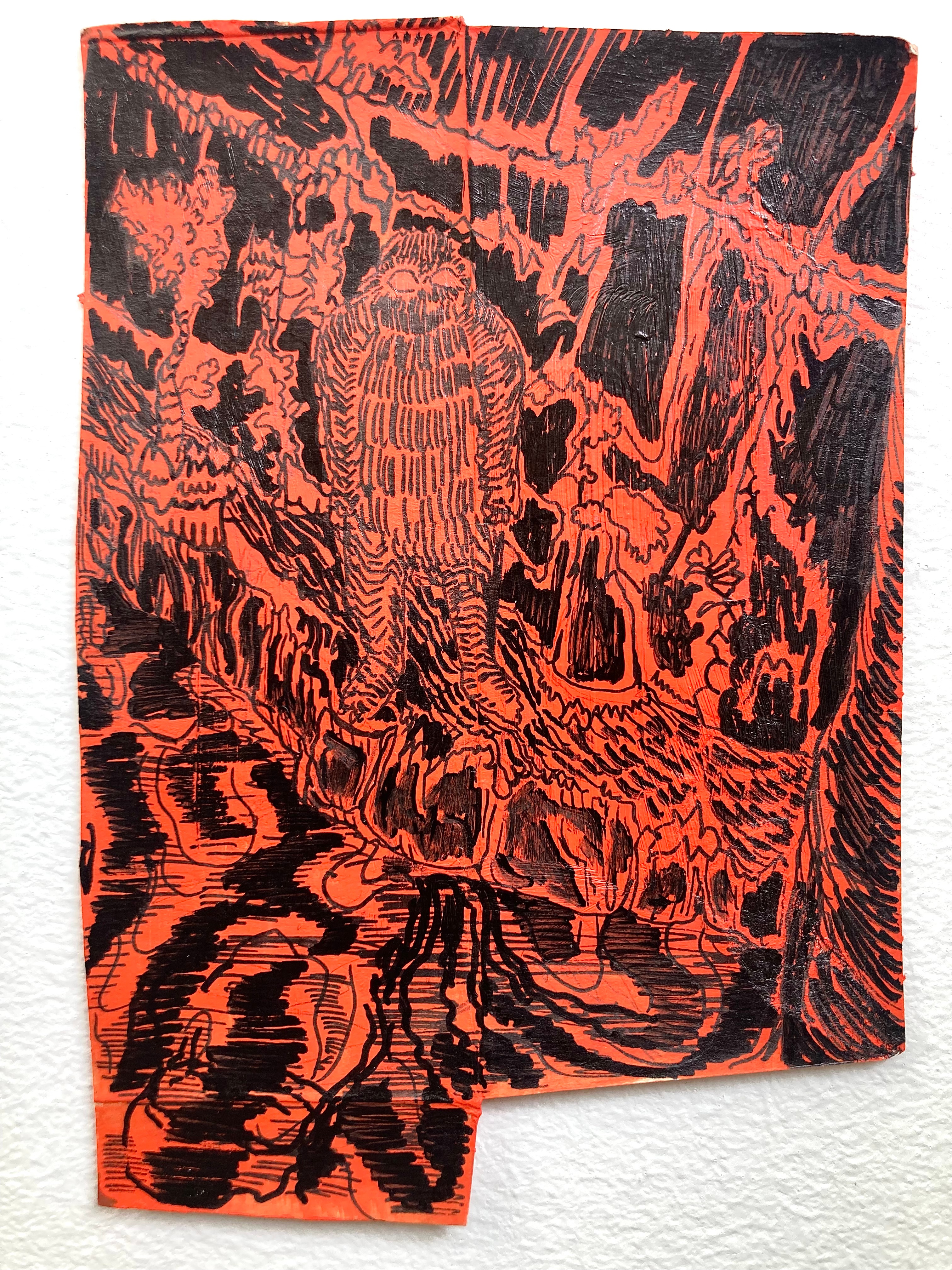

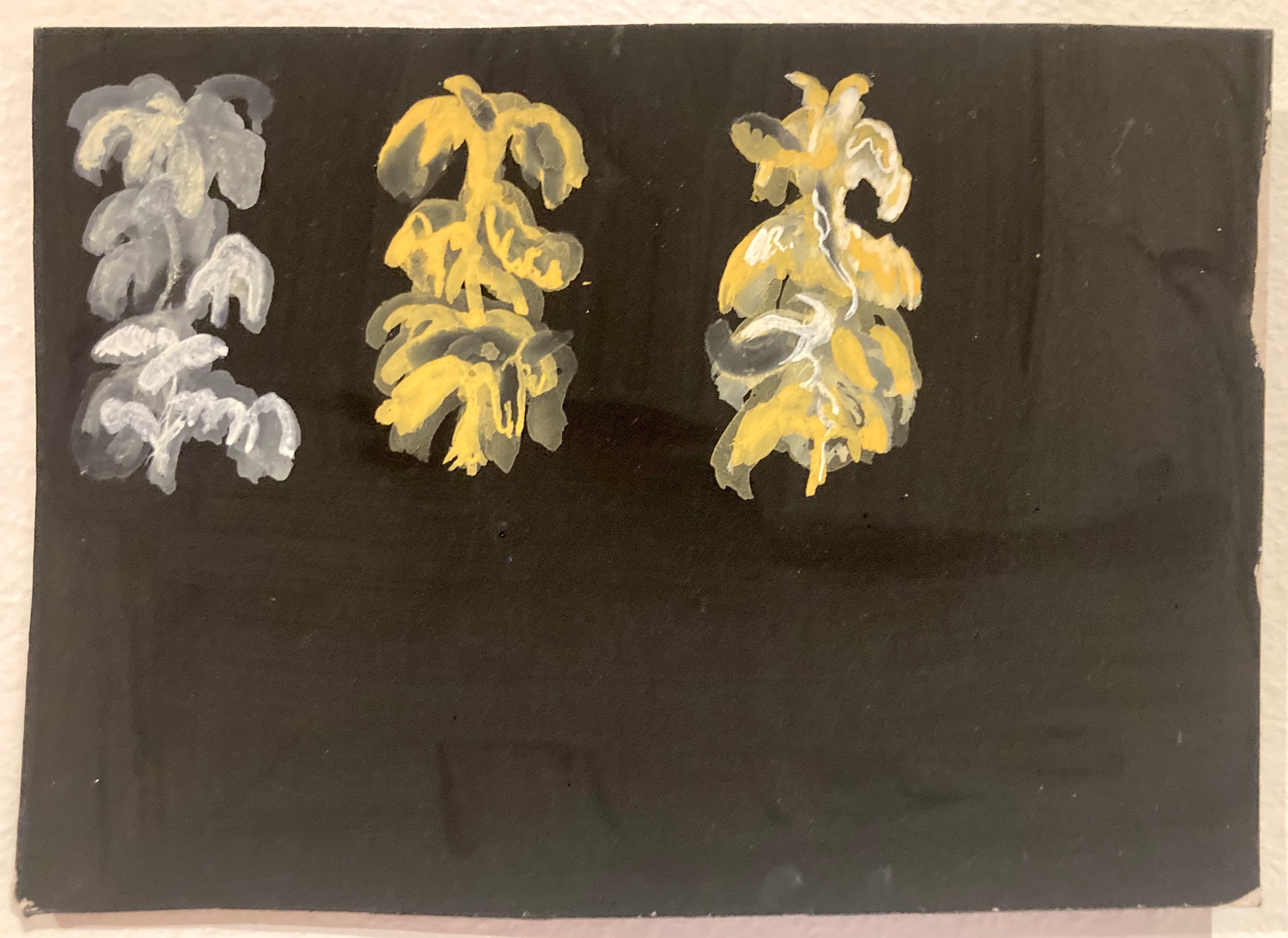
Bilia Na Biso — A second project — currently in development in collaboration with Bram Borloo and the collective Bilia Na Biso — explores how this remote process can be scaled up. Together, we investigate the possibilities of creating larger collective paintings across vast geographic distances, expanding the shared authorship that lies at the heart of Echo.
The ‘Grotta’ Project —
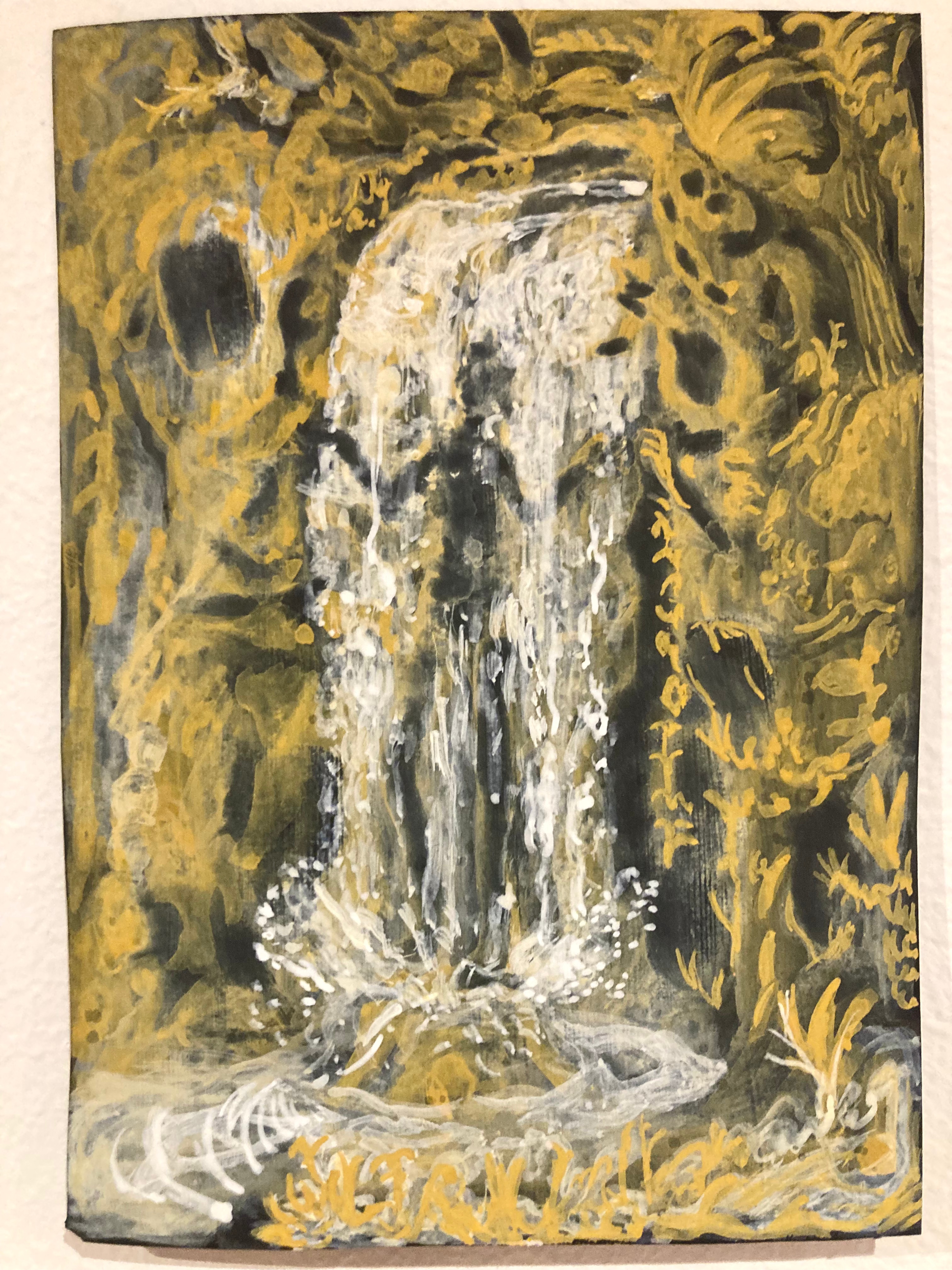
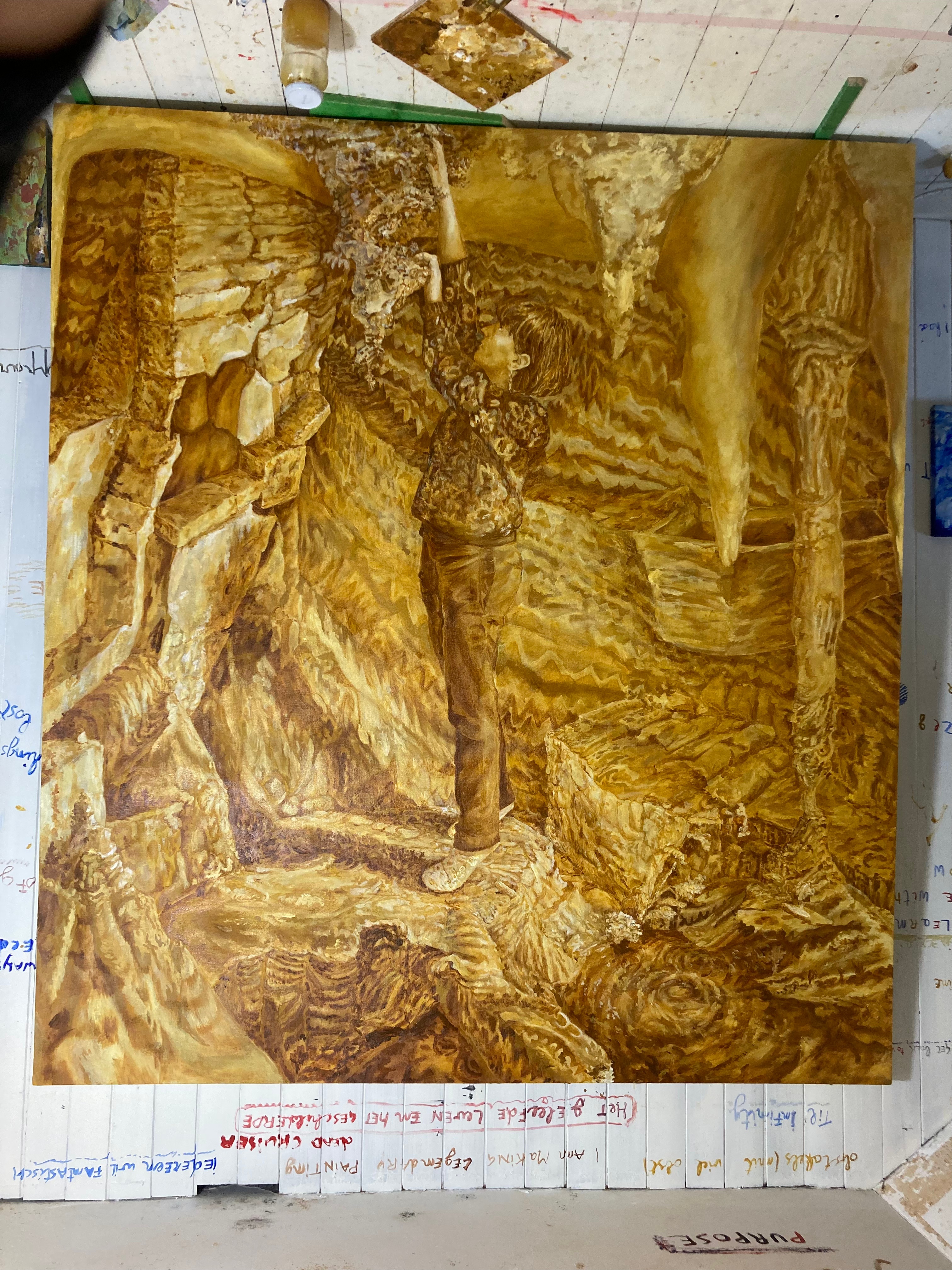
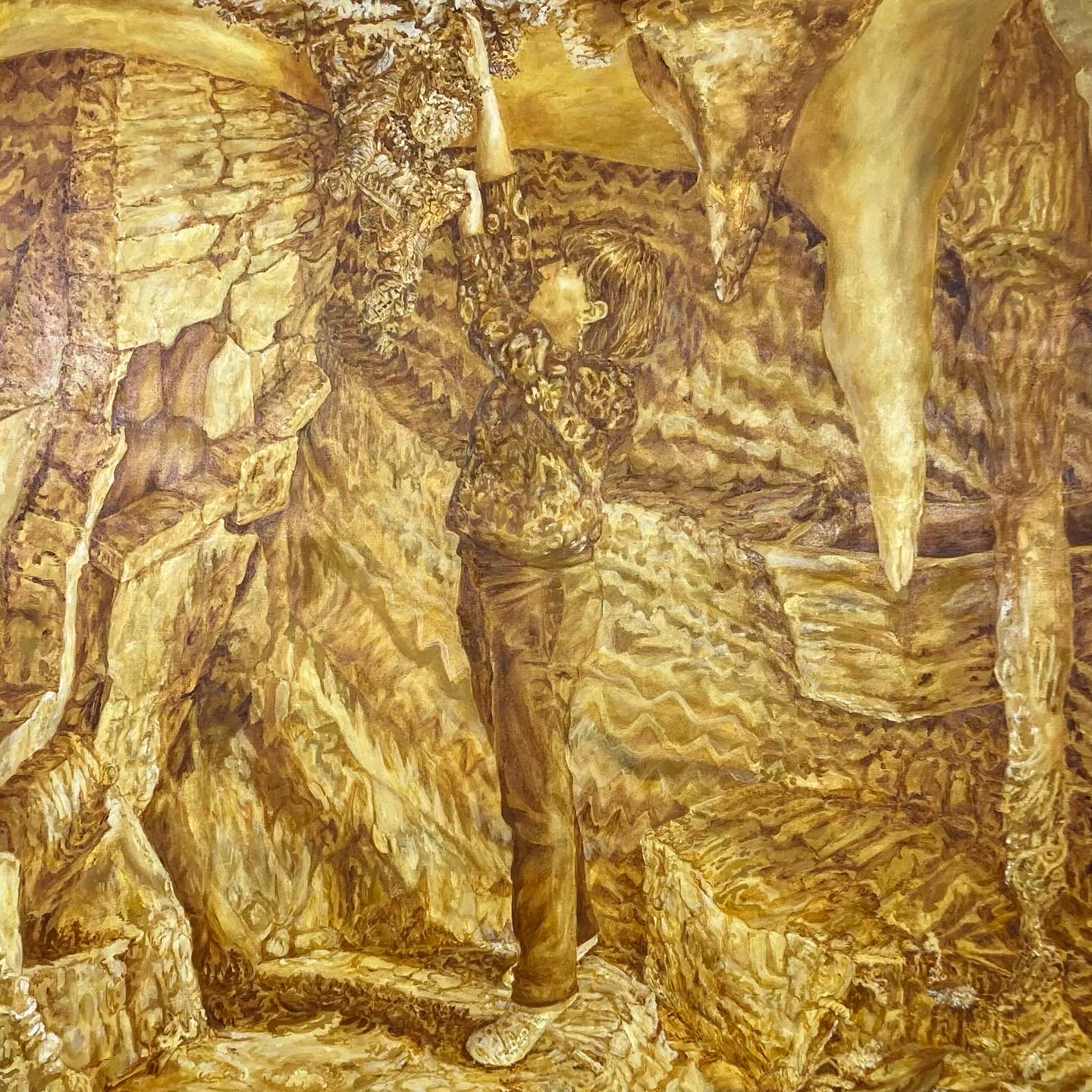
Grotta is a collaboration with Italian artist Virginia di Domenico. Without prior experience, but driven by a strong desire to visualize a specific experience—one centered around caves in the Italian mountains—Virginia’s passion and determination led us to building a life-sized cave (grotta in Italian) in a studio space. This constructed cave serves as a model for paintings. In turn, she drew inspiration from one of my paintings, De Bergenplukster or The Cave of Palto, when creating her Grotta and paintings.


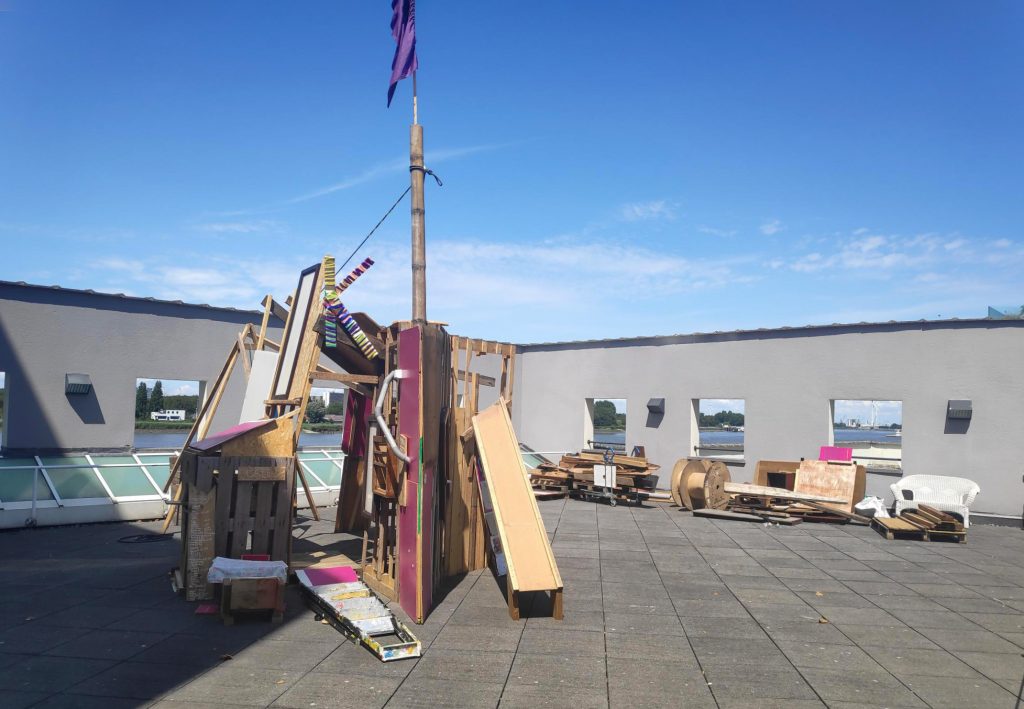
Lisa Matthys – Museum under construction (part of The Museum of Innocence) —Lisa’ s Museum of Innocence is an interactive installation inspired by the concept of the adventure playground, inviting children to intuitively construct an architectural form—a museum.
What drew me to this work was its emphasis on collective creation within a predetermined framework. Here, technique is redefined as a shared language—a means of facilitating communication and collaboration. In response, I initiated a studio-based dialogue with Lisa, aiming to explore transdisciplinary intersections between her practice and my ongoing project Echo.
What came before — Previous Projects — Archive
Historical Resonance —
Echo draws on the history of collective making: from medieval workshops where several painters worked on a single panel, to the repetitive labour in monastic scriptoria where manuscripts and miniatures were spiritual exercises. The project also echoes modernist models of shared authorship — Bauhaus, the Mexican muralists — and contemporary social practices that blur the line between artist and participant.
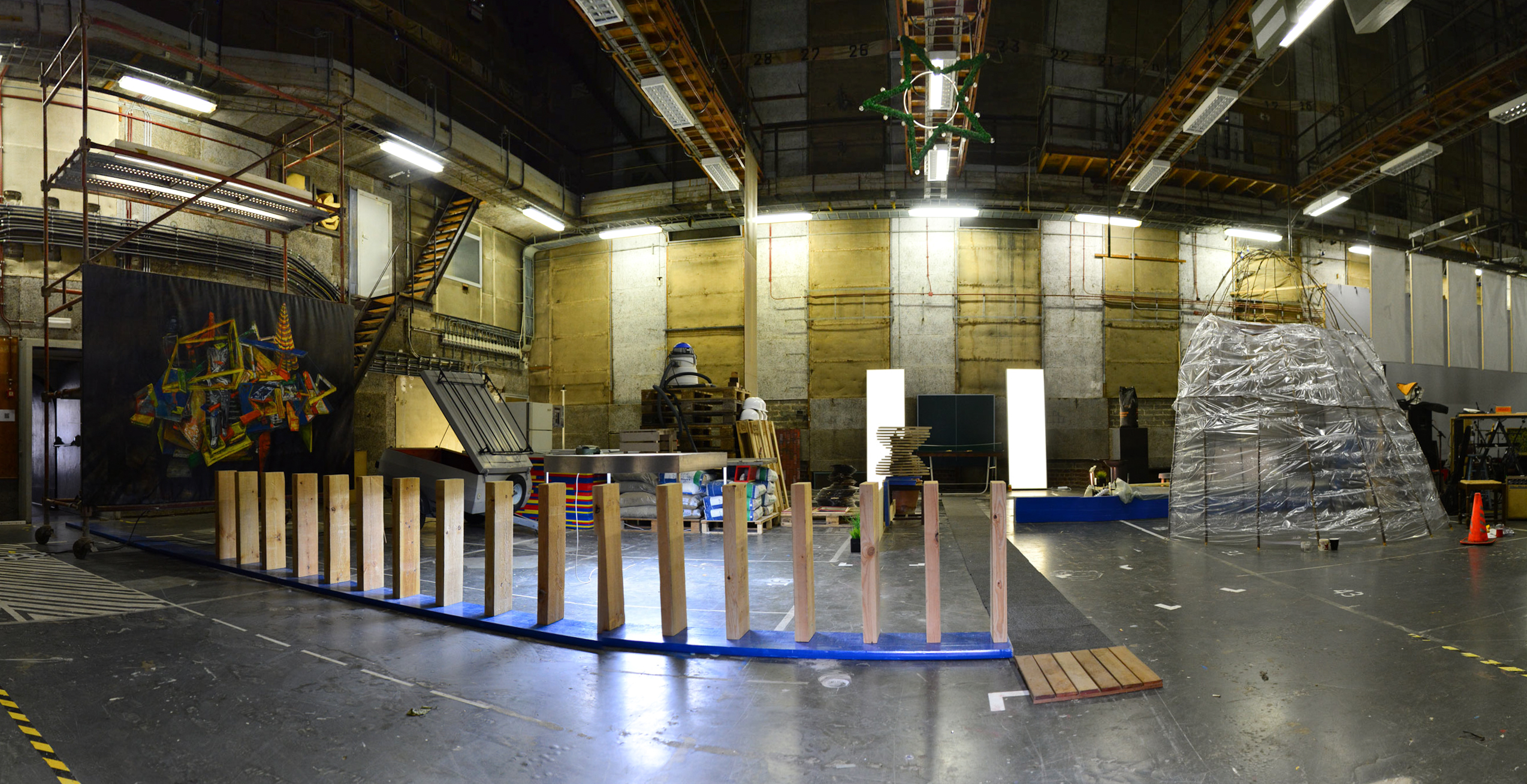
In response, we decided—when constructing this installation—to begin not from a predefined concept or structured manual, but from the vast stockpile of materials, artworks, furniture, and everyday objects we had collectively stored. These became our starting point. We approached them playfully and intuitively, using them to build something together—formally and physically—much like how children build structures together.
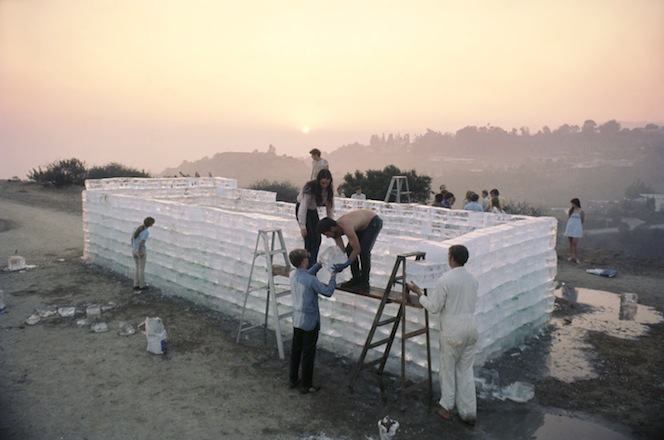
In this sense, Fluids opens up space for reflecting on what it means to make something together: not just physically, but socially. The act of building—collaboratively, in public, with transient materials—becomes a form of social sculpture, where the process matters as much as the outcome. For contemporary practices that explore shared agency, collective authorship, or participatory gestures, Fluids remains a foundational reference, precisely because it holds the tension between singular authorship and communal realization.
The philosophy of Gilles Deleuze provides a conceptual compass: his metaphor of the island — as both separation and emergence — guides the drawing process. Joseph Beuys’ notion of social sculpture resonates in the shared studio; Bourriaud’s concept of relational aesthetics informs the participatory presentation.
A Cartographic Installation —
Echo culminates in a spatial installation that renders the growing archive accessible to the public. The drawings — each stored in a protective plastic sleeve — are presented in standardized cardboard boxes, functioning like an open filing cabinet. Visitors are invited to browse these visual field notes as they would through archival index cards, discovering connections between fragments of observation, memory, and imagination.
The small paintings — or miniatures — are likewise stored in individual cardboard boxes. Though the paintings vary in size, the boxes are standardized as much as possible and stacked in tight, organized formations. Each box becomes a container for a singular contribution, yet collectively they form a layered, physical archive of shared authorship.
We work with a combination of self-made boxes crafted from recycled cardboard and standard, store-bought white cardboard boxes.
This modular setup invites reconfiguration. Visitors are not passive viewers but active participants, encouraged to handle, combine, and rearrange the materials. The installation does not present a final, fixed arrangement but instead proposes a shifting cartography — one that reveals, obscures, and reshapes meaning with each interaction. Like a map, it is both a guide and a mystery. A space between memory and invention, between past and potential.
Resonance Across Projects
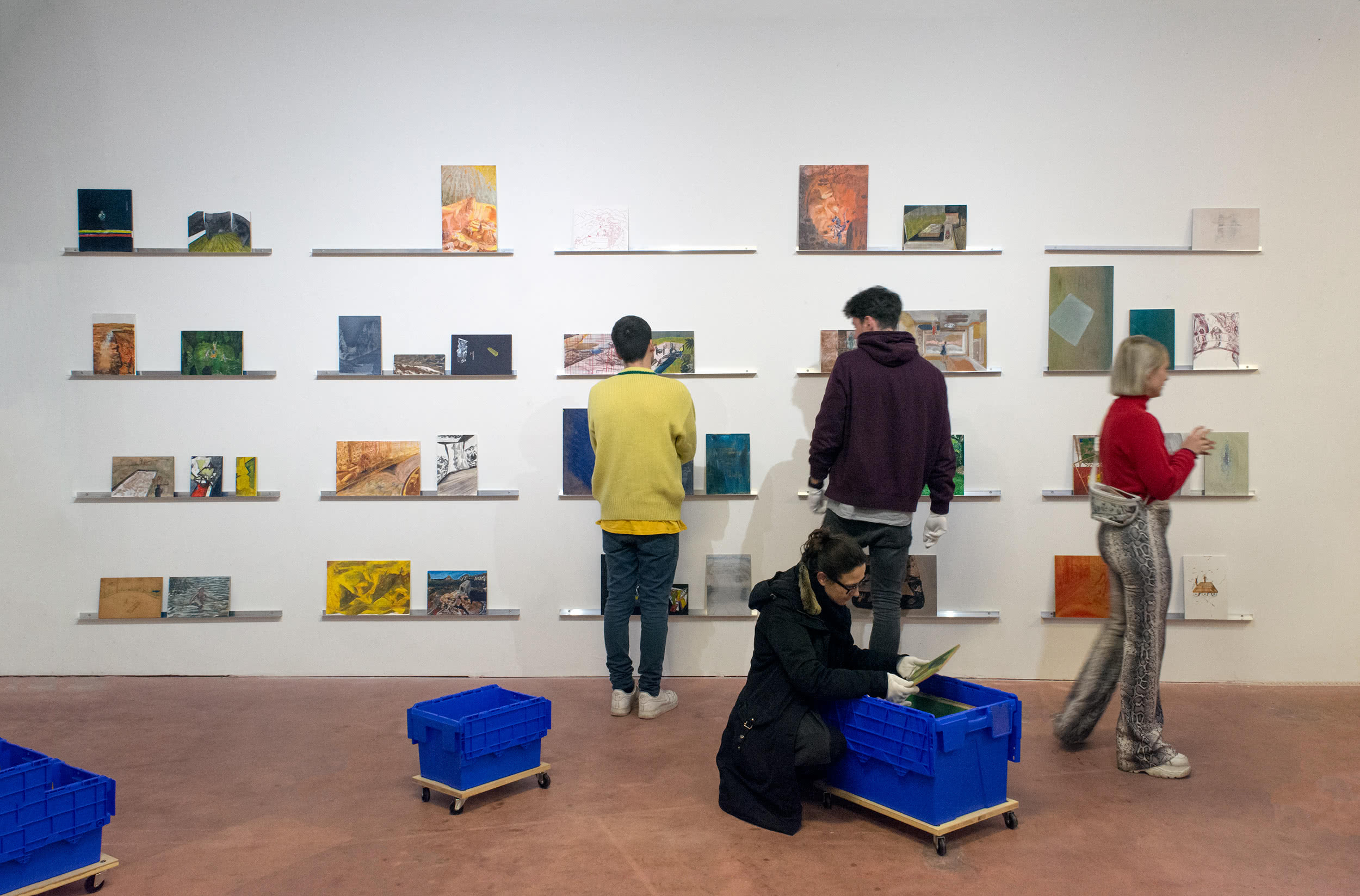
Echo — The Tables Have Turned is closely linked to an earlier project: Thesauros. First presented at Fortlaan 17 (Ghent), Second Room (Antwerp), Wolke (Brussels), and later in a solo exhibition at SomoS Art House Berlin, Thesauros also explored the idea of an imaginary cartography. That project consisted of more than 150 double-sided paintings on wooden panels, stored in blue crates and activated by the public.
Visitors were encouraged to handle, arrange and present paintings on aluminium rails — shaping their own version of the exhibition. The recurring swimming pool motif marked a symbolic safe haven within an otherwise unknown and shifting mental territory. Both Thesauros and Echo share a deep investment in orientation, interaction, and the imagination as a collective practice.
A Constellation of Voices
Echo — The Tables Have Turned is not a conventional exhibition, but a practice of resonance and re-imagination. Its title refers to a shift in perspective: the table turns, the roles change. Who draws? Who paints? Who decides what is seen?
The project embraces vulnerability — situated between individual and collective, care and art, document and fiction. It offers no definitive answers, only a space. An archipelago of attention. A constellation of voices, sounding again.
 Jan Verbruggen